
.png) Partner Elevate
|
Mar 03, 2022 05:01 pm
Partner Elevate
|
Mar 03, 2022 05:01 pm
.jpg)
If your prospect didn’t have a problem they needed to solve, they wouldn’t be in the market for a new product or service. That gives you an opportunity to help them understand why what you offer is the right fit. But to do that, you need to communicate value clearly — not just price.
This is the gold standard for a strong sales enablement strategy.
For any partner organisation, winning new business can feel like a never-ending challenge.
Partners tell us every day that they are wasting time on unqualified leads, relying too heavily on existing customers for new opportunities, and getting distracted by the pressure to constantly find new lead sources. What they really want is to spend more time converting qualified leads instead of qualifying them from the first touch. They also want to create a healthier balance between revenue from current customers and revenue from new business.
Salespeople need time to focus on the prospects most likely to buy. That means there is an expectation that marketing will hand over leads that are already qualified and ready for the next step.
We know that this is easier said than done. Creating a funnel that supports a competitive offer is no small task. It requires a clear approach to the content, messaging, and value communication used at every stage of the funnel.
So, what should come after first uncovering your customer’s market insight?
Why Communicating Value in Sales Matters More Than Competing on Price
How many times has a sales conversation ended with your prospect pushing back on price?
Many partner organisations believe the only way to stay competitive is through pricing — whether that comes from vendor support or by simply reducing margin. Another common belief is that the skills inside your business are what make you stand out. But price and skills are not your true differentiators. If those are the only things you rely on to win deals, that is probably why this topic feels so important.
Price can only go so low before the deal is no longer worth pursuing. And skills can be matched, bought, or developed by another provider.
So what else should you focus on when you are trying to stand out from the hundreds of other proposals, tenders, and SOWs in the pile?
How to Sell Outcomes Instead of Solutions in B2B Sales
One of the biggest mistakes sales teams make is focusing too heavily on the solution itself.
Customers are rarely buying a solution just because it exists. They are buying what that solution helps them achieve. That is why strong value communication focuses on outcomes, not just products, features, or technical capabilities.
If you want to communicate value more effectively, you need to show customers what changes for them after they engage with you.
3 Reasons Your Offer Is Not Competitive
1. You are focused on communicating why your product or service is the solution
When we focus only on the product or the solution, we almost always lose the customer’s attention. Instead, we need to communicate the outcome of what they will get, achieve, or experience after working with us.
2. Inconsistent positioning makes it harder to communicate value
When sales conversations turn into price conversations, or when you start putting a price on your people and skills, your positioning becomes inconsistent. That makes it harder for prospects to understand the real value of what you offer.
When the project is outcome-driven, your position remains clear and consistent.
3. Price pressure increases when your value is unclear
The more you try to win a sale on price, the more likely it is that the customer will lose confidence in your ability to deliver what you promised. That creates risk for both sides.
But if you fix these three issues and communicate value earlier and more clearly, you can capture the customer’s attention from the start. That means guiding the customer through the deal, owning the conversation, and reinforcing value throughout the sales cycle.
How to Create a Competitive Offer With a Value Selling Framework
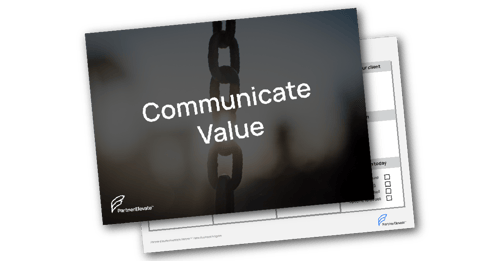
At Partner Elevate, we have created a process for partners to uncover their Value Sell™.
By looking at these six factors, you can better understand the real value of the solutions or services you offer — beyond the number on your invoice.
Work through the six sections below in order to uncover your Value Sell™.
1. Define the Solutions You Sell and the Value They Create
Think about the solution you sell most often. This is usually one of your go-to offers — something you regularly deliver to customers. It might be security, remote desktop, or productivity, for example.
Next, identify at least two benefits of that solution for your customer. To support those benefit statements, ask yourself whether you have data or evidence that shows the real benefits a customer can expect after engaging with you.
2. Clarify the Outcomes Customers Buy
Outcomes are specific, measurable statements that help customers understand when they have reached their goal.
They explain the changes your customer should expect to see in their knowledge, attitudes, skills, or behaviours after implementing your solution.
When writing outcomes, use the language your customers use. The more technical jargon you include, the easier it becomes for the customer to disengage from the conversation. Try to use clear verbs such as improve, reduce, enable, or remove.
This is one of the most effective ways to communicate value to customers.
3. Add an Industry Point of View to Strengthen Your Value Story
In this section, explain how the solution has been used by another customer.
Aim for around 30 words that show how a customer in a similar industry used your solution to achieve the outcome they needed. This makes your value communication more relevant, specific, and credible.
4. Use an Economic Lens to Communicate Business Value
This is where your value sell becomes more tangible.
Think about the customer you are targeting and establish value through an economic lens. Have they reduced costs by using your solution? Have they improved efficiency, saved time, or increased output?
You are looking for a practical way to connect your offer to business value so the customer can clearly see why it matters.
5. Address Alternative Ways Customers Might Solve the Problem
This is where you acknowledge the other options your customer has.
We know there are many things that can stop customers from realising the full benefit of a solution. Business priorities shift. Time is limited. Budgets are tight. Staff and skills may be constrained.
There may not be time to implement the full solution, or the customer may not be ready to act on every part of the opportunity. Even so, you still want to be clear about the alternative paths available to help them move forward.
That means identifying the other ways they could try to achieve the same outcomes.
6. Explain the Impact of Doing Nothing
Clearly outlining the impact of doing nothing can be even more powerful than talking only about benefits and outcomes.
It creates urgency.
Think about whether there is a risk in not implementing the solution or not solving the problem. Perhaps there is a missed opportunity. Perhaps they fall behind competitors. Perhaps the market becomes even more difficult if they delay action.
Showing the cost of inaction helps customers understand why the decision matters now.
How to Communicate Value Earlier in the Sales Cycle
Having a price-based conversation too early will reduce your perceived value in the eyes of the customer.
If you do not lead with value at the beginning of the sales process, the customer will almost always start evaluating your offer through price alone.
But if you answer the six questions above and use those insights to shape your messaging, positioning, and offer, you will already be several steps ahead of the competition.
Final Takeaway: Create a Stronger Competitive Offer by Communicating Value Clearly
The most competitive offers are not always the cheapest. They are the clearest.
When you communicate value through customer outcomes, business impact, industry relevance, alternative options, and the cost of doing nothing, you give prospects a stronger reason to choose you — without relying on price alone.
Ready to get started creating your competitive offer today?
Ready to get started creating your competitive offer today?

Recent Articles
- AI Billable Hours: Why Channel Partners Need a New Services Engine
- How AI Discovery Is Changing B2B Software Buying, Marketplace Checkout & Partner Impact
- AWS Partner Capability: Why It Now Drives Success and Revenue
- AWS Partner Multiplier: Why Capability Is Your Growth Advantage
- Offer Creation Formula Case Study: How Intergy Improved Lead Conversion
- How to create opportunity for lead engagement using sales enablement platform
- Case Study Creation Process: Build Credibility for Channel Partners
- How to Connect With Prospects Without Wasting Time on Cold Leads
- Lead Magnet Strategy: How to Build Your List | Partner Elevate
- Steady Lead Generation: How to Attract Interested People